
TCHV 3005 - Build School Communities: Brain Smart Classroom Management
Description
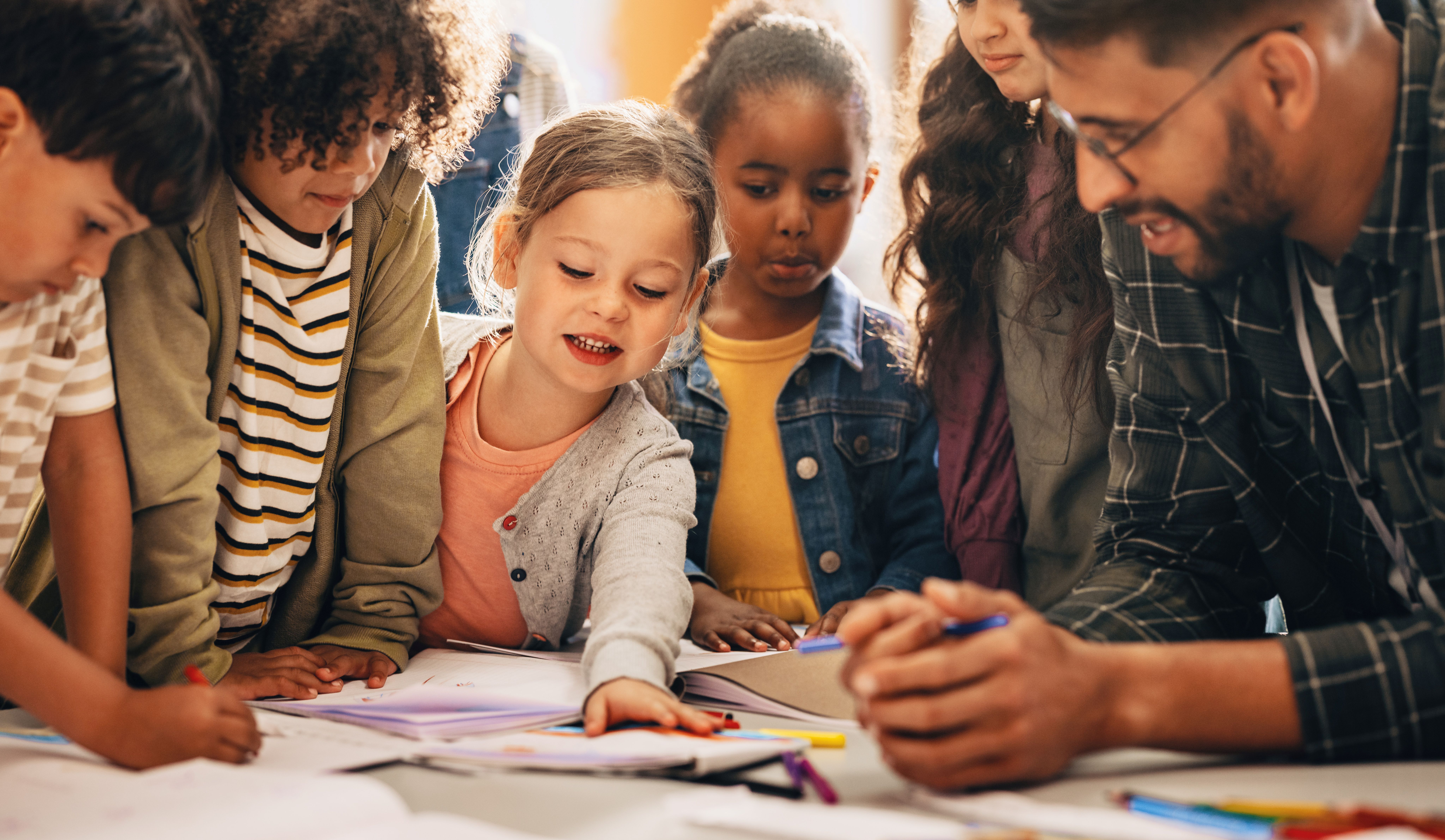
Build Schools Communities for Educators is intended to bring about effective transformative actions, resulting in kindred class-homes where students and teachers in the school family will bond and work with acceptance, respect, and shared purpose to benefit all members. Students will develop strategies, rituals, and design and environmental skills to create safe havens of learning. For many of our students, our classrooms may be the only safe, nurturing refuge in their otherwise turbulent lives. In traditional “sage on the stage” models of classroom discipline and management, top-down authoritarian systems are grounded on punitive consequences. Teachers make rules and enforce them, often without any discussion with students. This approach results in disequilibrium in the classroom, with some students receiving praise and tangible rewards while others suffer the consequences of noncompliance. Most educators are familiar by this time with Gardner’s Theory of Multiple Intelligences, but the concept is limited to academics. “Guide by your side” behavior management must be differentiated in the same way that instruction and learning experiences are differentiated. Academically, students have diverse learning styles and preferences that must be addressed if they are to reach their full potential. Why would we expect students to be any less diverse socially, developmentally, and psychologically than they are academically? One size does not fit all; but together, all sizes reveal a good synergy fit of differing gifts greater than the sum of their parts. Some of our students have physiological or psychological disabilities that affect their behavior, such as ADHD, fetal alcohol syndrome, and autism. Other students’ behaviors may be affected by environmental factors: divorce; incarcerated parents; foster care; physical, sexual, or emotional abuse; domestic violence; drug or alcohol abuse; poverty; gang influence; poor nutrition; transience; homelessness; negligence; etc. One set of rules, rewards, and consequences cannot be expected to work with the diverse groups of students we have in our classrooms today.
Outline
- Chapter 1: Traditional School Relationships Versus Kindred School Relationships Traditional school structures of power and authority are examined and contrasted with a new paradigm of relationship, collaboration, and synergy. The role of teacher as a coach, guide, or facilitator as opposed to the omnipotent dispenser of knowledge has developed gradually over the past 30–40 years. Many educators have learned to not only accept, but also embrace, their role as “guide on the side” rather than the “sage on the stage.” Although most agree that this is a positive evolution in education, drawbacks accompany any change, and in this case the drawbacks may be time diverted from learning in the absence of sufficient discipline in the classroom. The key is helping students to develop self-discipline rather than continuing with the traditional model of authoritarian, top-down forms of discipline. · Banking Concept of Education · Constructionist Classrooms · Collaborative & Cooperative Learning
- Chapter 2: Models of Social Learning & Differentiating for Diverse Needs Several social learning models, personality types, and intelligence types are explored and discussed, with an emphasis on developing positive, synergistic relationships between diverse students and teachers. Learn about the many ways in which we differ, and how we can take advantage of those differences to be stronger, smarter, and more effective as teams working together than we could ever be on our own. · Introduction and discussion of Bronfenbrenner’s Ecological Systems Model · Introduction and discussion of Senge’s Theory of Learning Organizations · Introduction and discussion of Gardner’s A-Typical Intelligence Types: Interpersonal, Intrapersonal, Naturalistic, and Existential · Introduction and discussion of Reverman’s Synergy Types – Think, Look, Talk, Feel · Examination of brain states and how they affect behavior and learning · Discussion of culturally responsive pedagogy
- Chapter 3: Classroom Management Systems Several well-known classroom discipline models are explored, compared, and contrasted. Current digital tools are demonstrated that make classroom management quick and easy for teachers and fun for students. · Fred Jones’ Positive Discipline in the Classroom · Fred Jones’ Positive Instruction · Jane Nelson’s Positive Discipline · Conscious Discipline · Love & Logic · Assertive Discipline · Digital Classroom Discipline Tools · Class Dojo · Classcraft · Trauma-Informed Practices o School shootings o Deportation of undocumented immigrants o Dreamers and DACA o Being female o LGBT students · Supporting Traumatized Students o School climate team o Social emotional learning (SEL) o Success Centers · Restorative Justice
- Chapter 4: Designing the Classroom & Strengthening Family Bonds Strategies are described for creating safe, nurturing classhomes where strong and positive relationships between students and between teachers and their students develop and thrive. · Creating safe, nurturing class-home environments · Using literature and lessons that reinforce positive relationship building · Engaging in songs and activities that reinforce positive relationship building · Playing cooperative games that reinforce positive relationship building · Developing empathy in students · Helping students self-regulate and de-escalate · Fostering service learning and self-esteem · Creating lasting bonds
Program Objectives
- Articulate the differences between traditional school relationships versus kindred school relationships
- Discuss Bronfenbrenner’s Ecological Systems Model and how it relates to classroom development
- Describe Senge’s Theory of Learning Organizations and how it relates to classroom synergy
- List and describe Gardner’s A-Typical Intelligence Types and how these affect behavior and learning
- List and discuss Reverman’s Synergy Types and how these affect behavior and learning
- Review brain-based behavior models and their effect on learning and social behavior
- Understand and articulate how bullies are created and how bullies can be retrained
- Understand the effects of trauma on students and develop strategies to help students heal, develop resilience and coping strategies, and build positive relationships using social emotional learning (SEL)
- Understand culturally responsive pedagogy and develop skills to integrate it into curriculum and school environment
- Compare and contrast Fred Jones’ Positive Discipline model with other classroom management systems
- Review and discuss how to create a nurturing, safe classroom
- Analyze literature and lessons that reinforce positive relationship building with students
- Study and discuss songs and activities that reinforce positive relationship building with students
- Review and list cooperative games that reinforce positive relationship building with students
- Understand and describe how to develop empathy in students
- Understand and describe how to help students self-regulate emotions, behavior, and social interactions
- Understand Restorative Justice and develop skills to implement restorative practices at the classroom or school level
Notes
This course is offered in partnership with VESi. Learners must earn a minimum of 70% in the course to receive continuing education units.